How to Turn a Basic Hot Dog into a Gourmet Meal
The gap between a forgettable hot dog and a genuinely impressive one is smaller than most people think. You do not need a smoker the size of a shed, imported truffles, or a chef’s jacket with your name stitched on the chest. What you need is judgment. A great hot dog comes from treating each part, the sausage, the bun, the toppings, the heat, the balance, as if it matters. Because it does.
I learned this the hard way years ago while helping with outdoor events where hot dogs were the default crowd-pleaser. The first few times, we did what everybody does when they are in a hurry. Cheap buns, split open. Sausages boiled into submission. Mustard and ketchup set out in squeeze bottles that had probably seen too much sun. People still ate them, of course. A hot dog is one of those foods that benefits from low expectations. But the moment we started making a few smarter choices, people noticed. They came back for seconds. They asked what brand we used. They stood near the grill because the smell had changed. That is the point where a basic hot dog stops being filler and becomes dinner.
Start with the sausage, because everything else follows from it
If the hot dog itself is bland, no amount of caramelized onions or artisanal pickles will rescue it. The sausage is the engine of the whole meal, and the first decision is style.
An all-beef hot dog has a distinct personality. It is savory, slightly mineral, often more assertive, and stands up well to sharp mustard, onions, and pickled toppings. A pork or mixed-meat dog tends to be softer and a little sweeter, which can work beautifully with slaw, relishes, and richer sauces. A smoked sausage or frank brings another layer entirely, deeper and more robust, but it can overpower delicate toppings.
Casings matter more than many people realize. Natural casing hot dogs snap when you bite them, and that snap contributes as much to the experience as the flavor. Skinless hot dogs are easier to find and often easier to serve for a crowd, but when I want a gourmet result, I almost always prefer natural casing. The texture makes the whole thing feel intentional.
Size matters too. The standard supermarket hot dog can get lost once you start adding substantial toppings. A thicker frank, something closer to a quarter-pound sausage, gives you room to build without losing the center. If you prefer a smaller dog, keep the garnishes tight and restrained.
This is also the place to spend a little more money. Not extravagantly, just enough to move from anonymous to well-made. In most stores, there is a visible jump in quality between the cheapest pack and the mid-tier or butcher-counter option. That jump is often more important than anything you will do later.
Heat changes flavor more than toppings do
People argue endlessly about condiments, but the cooking method shapes the hot dog before it ever reaches the bun. Boiling is fast and forgiving, and it has its place when you are feeding a lot of people. It also mutes character. The surface stays pale, the exterior does not develop texture, and some of the flavor ends up in the water instead of in the sausage.
If you want a more refined result, use dry heat or at least direct contact with a hot surface. Grilling gives you char, smoke, and blistering. A cast-iron pan gives you even browning and excellent control. A flat-top or griddle is ideal if you want that diner-style crust. Even roasting in a hot oven is better than simmering if your goal is concentration and browning.
There is also a small trick that makes a noticeable difference. Score the hot dog lightly, just enough to create a little more surface area, especially if it is thick. Not deep gashes that split it open, just a few shallow diagonal cuts. Done properly, those edges crisp slightly, the sausage curls less, and condiments cling more neatly. Done badly, you lose juices and create a ragged appearance. This is one of those details that rewards restraint.
When grilling, moderate heat beats aggression. Many home cooks go too hot and chase dramatic grill marks while leaving the interior only just warmed through. A gourmet hot dog should be hot all the way through, juicy, and evenly bronzed. A few extra minutes over medium heat will get you there.
The bun is not packaging
A good bun is not merely something to hold the sausage until your hands take over. It is part of the bite, part of the aroma, part of the temperature management, and part of the structure. Yet it is often treated as an afterthought.
The ideal bun is soft enough to compress when you bite it, but sturdy enough not to collapse under moisture. Brioche is fashionable, and sometimes deservedly so, but it is not automatically the best choice. Its sweetness can be lovely with smoky, spicy sausages, yet it can also push the entire hot dog toward dessert if your toppings are already sweet. A potato roll often strikes a better balance. It stays tender, browns beautifully, and has enough body to absorb butter without becoming greasy.
Toasting changes everything. A plain bun makes the hot dog feel cafeteria-level. A bun brushed lightly with butter or mayonnaise and toasted on a griddle feels restaurant-level. The outside gets a little crisp, the inside warms, and the aroma rises before you even take a bite. If I had to name one habit that upgrades the average hot dog with almost no extra cost, it would be this.
Split-top buns deserve special praise. They give you a broad, stable surface, which is especially useful if you plan to build a composed hot dog with toppings that have height or moisture. New England-style buns, toasted on the sides, are exceptional for this reason. They also look cleaner on the plate, which matters more than some people admit.
Balance is the difference between loaded and gourmet
Many people hear “gourmet hot dog” and assume it means piling on as much as possible. That approach usually leads to a mess. A gourmet meal depends on contrast and proportion, not volume.
Think of the hot dog the way you would think of any composed dish. It needs richness, acidity, salt, texture, and, often, some freshness. The sausage brings fat and savoriness. From there, you decide what is missing. Sharp mustard can cut through richness. Pickled onions can brighten. Slaw can add cool crunch. A warm onion jam can deepen sweetness, but it may need something tart beside it to avoid heaviness.
The biggest mistake is combining toppings that all occupy the same flavor register. Cheese sauce, bacon, fried onions, and mayo-based slaw on one dog may sound indulgent, but often tastes flat after two bites because everything is rich, salty, and soft. The first bite is fun. The fourth is tiring.
A better hot dog usually has one primary direction. Maybe it is smoky and sharp. Maybe it is spicy and herbal. Maybe it leans sweet-savory with a touch of acid. Once you know the direction, it becomes easier to stop adding ingredients simply because they are available.
Build around a clear theme
One of the easiest ways to elevate a hot dog is to treat it like a dish with a point of view. Restaurants do this instinctively. Home cooks often do not, which is why many hot dogs end up tasting random.
Here are five combinations that work because each has a distinct identity:
- All-beef hot dog with whole-grain mustard, sauerkraut, and a few caraway seeds
- Pork hot dog with apple slaw, sharp cheddar, and a little cider vinegar glaze
- Grilled frank with charred jalapeños, pickled red onion, and crema
- Smoked sausage with braised onions, Dijon, and chopped parsley
- Beef hot dog with kimchi, scallions, and a light drizzle of spicy mayo
Notice that none of these is overloaded. Each one has contrast. Each one has something warm, something bright, and something textural. That is the pattern worth copying, not the specific ingredients.
The kimchi version, for example, works because kimchi does several jobs at once. It brings acid, heat, crunch, funk, and moisture. That means the other components can stay minimal. The apple slaw version succeeds because the fruit echoes the sweetness of pork without tipping into candy, and the vinegar keeps it focused. Good combinations save you work because one ingredient carries multiple responsibilities.
Condiments deserve more care than they usually get
A squeeze of yellow mustard has charm, and there is nothing wrong with nostalgic flavors. But if you are trying to turn a basic hot dog into a gourmet meal, this is the moment to get more deliberate.
Mustard alone offers a full spectrum. Yellow mustard is bright and simple. Dijon is smoother, sharper, and more vinous. Whole-grain mustard brings texture and a slower, more complex heat. English mustard can be thrilling in tiny amounts and overwhelming in larger ones. If the sausage is mild, a stronger mustard can wake it up. If the sausage is heavily smoked or highly seasoned, a gentler mustard may be wiser.
Relishes vary wildly as well. A neon-green sweet relish signals one kind of hot dog, mostly nostalgic and unapologetically casual. A finely chopped cornichon relish with fresh dill signals another. Both can be good. The question is what story the hot dog is telling.
Mayonnaise-based sauces can add body, but they benefit from restraint. A thin swipe under the sausage often works better than a thick drizzle over the top. This keeps the bun from going soggy and lets the sausage remain the dominant flavor. Aioli can be excellent, but only if you remember that garlic intensifies quickly in combination with grilled meats.
Ketchup is the most controversial piece of the puzzle, usually for reasons that are more cultural than culinary. Used carelessly, it can make everything taste sugary. Used sparingly with smoky or spicy elements, it can make sense. The broader principle is this: every condiment should either sharpen, cool, sweeten, or unify. If it does none of those, leave it off.
Texture is where the luxury feeling comes from
Flavor gets attention, but texture is what makes a hot dog feel special. The best ones are not uniformly soft. They have contrast at every level: the snap of the casing, the gentle resistance of the bun, the crackle of toasted edges, the crispness of pickles or slaw, perhaps the silkiness of a sauce beneath.
This is why raw chopped onions can still outperform more expensive toppings in the right setting. Their crunch cuts through fat in a direct, almost mathematical way. The same is true of finely shredded cabbage dressed with acid. The ingredients are humble, but the effect is sophisticated because they solve a structural problem in the bite.
Fried onions can work, though they are easy to misuse. A small handful adds crunch and nuttiness. Too much creates a roof of crumbs that falls off the moment you lift the bun. Crispy shallots are more elegant and often easier to control. Toasted seeds, crushed kettle chips, or even roasted nuts can be interesting, but only when used with a light hand. You are dressing a hot dog, not breading it.
Cooked toppings separate good intentions from real craft
There is a noticeable leap in quality when one of the toppings is cooked with care. Raw toppings are useful, but cooked toppings bring depth and aroma, and they make the hot dog feel more like a composed meal than a snack.
Caramelized onions are the classic example. Properly made, they are sweet, savory, and almost jam-like, with enough complexity to transform a simple sausage. Improperly made, meaning rushed over high heat until unevenly browned, they taste harsh and greasy. Real caramelized onions take time, often 30 to 45 minutes for a moderate batch, sometimes more. That does not mean they are difficult. It means they reward patience.
Mushrooms can be excellent too, especially with beef hot dogs. Cook them long enough to drive off moisture, then season them assertively. If they stay watery, they soak the bun and dull the entire bite. Peppers are another strong option, particularly when blistered or softened with olive oil and a splash of vinegar.
Warm toppings should never be an afterthought. If you go to the effort of making onion jam or braised cabbage, serve it hot or at least warm. Temperature layering matters. A hot sausage with cold toppings is pleasant. A hot sausage with warm toppings and one cool accent feels more considered.
Cheese can help, but it often gets in the way
Cheese is one of the fastest ways to make a hot dog feel indulgent, and one of the fastest ways to make it feel heavy. The trick is to choose cheeses that contribute flavor rather than just molten bulk.
Sharp cheddar works because it has bite. Crumbled blue cheese can be wonderful with grilled onions and a beef frank, though it needs a steady hand. Swiss pairs naturally with sauerkraut and mustard, provided you do not smother https://kameronuqam489.pinehavenscope.com/posts/regional-hot-dog-styles-you-need-to-taste the sausage. Pepper Jack brings spice but can disappear under aggressive toppings. Fresh cheeses, such as queso fresco or a mild feta, can add salt and creaminess without the blanket effect of melted cheese.
Cheese sauces are tricky. They are easy to love at a ballpark and harder to refine at home. Most homemade versions need careful thinning and seasoning to avoid tasting pasty. If you go this route, use less than you think. A narrow ribbon usually tastes better than a ladleful.
The plate matters if you want a meal, not just a hot dog
Turning a hot dog into a gourmet meal is not only about what sits in the bun. It is also about what surrounds it. The same hot dog feels entirely different next to a heap of plain chips versus a small, well-dressed side.
This does not require a three-course production. A vinegar-forward potato salad, a fennel slaw, grilled corn with lime, or even a simple cucumber salad can shift the whole experience. The goal is to support the hot dog, not compete with it. If the hot dog is rich and smoky, the side should probably be crisp and acidic. If the hot dog is sharp and spicy, a creamier side can make sense.
Portioning also changes perception. One oversized hot dog buried under a mountain of toppings can feel clumsy. Two smaller hot dogs, each dressed cleanly and served with a composed side, can feel surprisingly polished. This is useful when entertaining. Guests often enjoy variety more than excess.
Presentation is not pretension. A hot dog served on a warm plate, with toppings arranged instead of dumped, and a side that looks intentional, invites people to taste rather than just eat. That changes how they experience the meal.
A few practical rules make service much smoother
Most hot dog disappointments happen in the final minute, when everything comes together too quickly and the details slip. This is where process matters.
Use this short sequence when you want consistent results:
- Prepare all toppings before cooking the hot dogs
- Toast the buns just before assembly
- Cook the hot dogs until well browned and fully heated through
- Apply sauces sparingly, then add bulk toppings
- Serve immediately while the bun is warm and the sausage still has snap
That last point is especially important. A gourmet hot dog has a short window where everything is at its best. Wait too long, and the bun steams itself soft, the toppings lose contrast, and the sausage skin softens. Hot dogs are not complicated, but they are time-sensitive.
Mistakes that quietly ruin a promising hot dog
Overdressing is the most common issue, but not the only one. Another frequent problem is under-seasoning toppings. Home cooks sometimes assume the sausage is salty enough to carry everything. Then the slaw is bland, the onions are sweet but flat, and the whole hot dog tastes oddly dull despite multiple components. Every topping should be seasoned on its own.
Moisture management is another make-or-break factor. Wet sauerkraut, watery salsa, under-drained kimchi, or poorly cooked mushrooms all end up in the bun. If a topping carries liquid, give it a moment to drain or reduce before serving. Gourmet hot dogs are generous, not soggy.
There is also the issue of temperature mismatch. A cold bun is one of the fastest ways to sabotage a beautiful sausage. So is a lukewarm cooked topping that was made ahead and never reheated. Little details compound quickly.
One more subtle mistake is trying to make every bite surprising. Surprise is overrated in a hot dog. Coherence matters more. If every topping is shouting for attention, the dish loses its center. A good gourmet hot dog still tastes first and foremost like a hot dog, just one with clarity, balance, and craft.
When simplicity beats novelty
There is a temptation to prove sophistication through unusual ingredients. Sometimes that works. More often, the better move is to perfect a classic profile using better technique and better components.
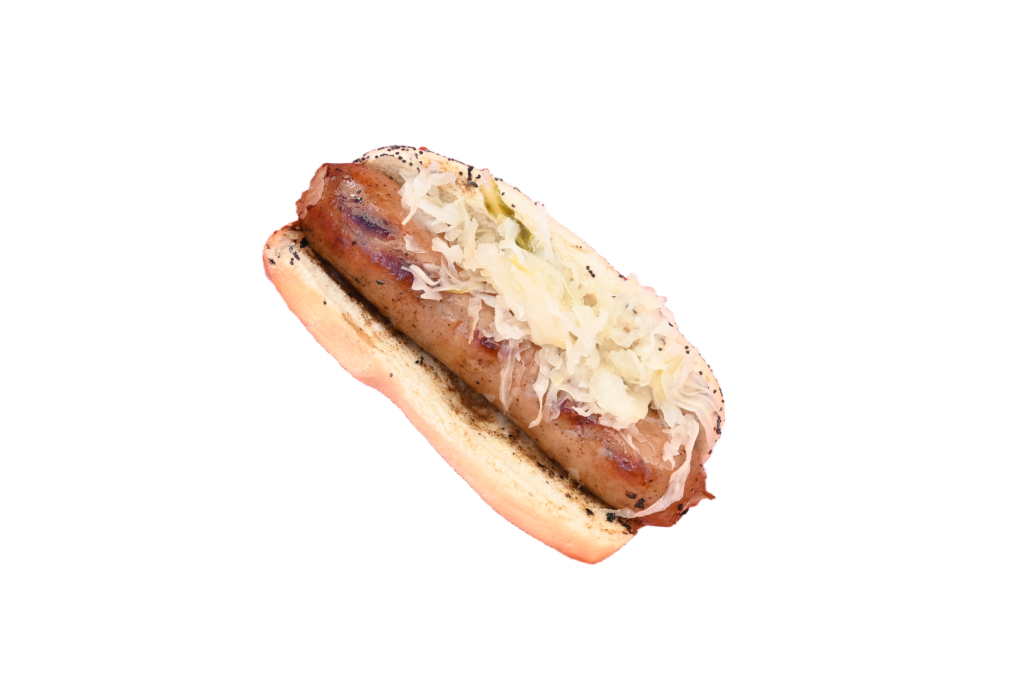
A beautifully grilled all-beef hot dog on a butter-toasted bun, topped with warm sauerkraut, good mustard, and finely diced onion, can outshine far more elaborate creations. Why? Because every element belongs there, and each one is handled well. There is no weak link and no gimmick.
That is worth remembering if you are cooking for guests. People appreciate originality, but they remember deliciousness. If you know your onions are excellent, your buns are toasted, and your sausages are first-rate, you are already most of the way to a gourmet meal.
The hot dog has always had one great advantage over more formal dishes: it invites pleasure without ceremony. Elevating it does not mean stripping away that spirit. It means respecting the ingredients, understanding balance, and making a series of smart, modest choices. Do that, and a basic hot dog stops feeling basic at all. It becomes the kind of meal people talk about on the drive home, wondering why theirs never taste quite like that.
Under Construction Hot Dogs
1225 W U.S. Hwy 50, Pueblo, CO 81008
FAQ About hot dog
What are different types of hotdogs?
Under Construction Hot Dogs offers a classic all-beef hot dog, a quarter-pound Jumbo Dog, a Chili Dog, and a Chicago Dog, along with brats and a Spicy Link.
What does a chili dog have on it?
Our Chili Dog pairs a Vienna all-beef hot dog with chili, shredded cheddar cheese, and finely diced onions.
What is in a traditional Chicago dog?
Our Chicago Dog comes on a steamed poppy seed bun with yellow mustard, bright green relish, onions, tomato wedges, a pickle spear, sport peppers, and celery salt.